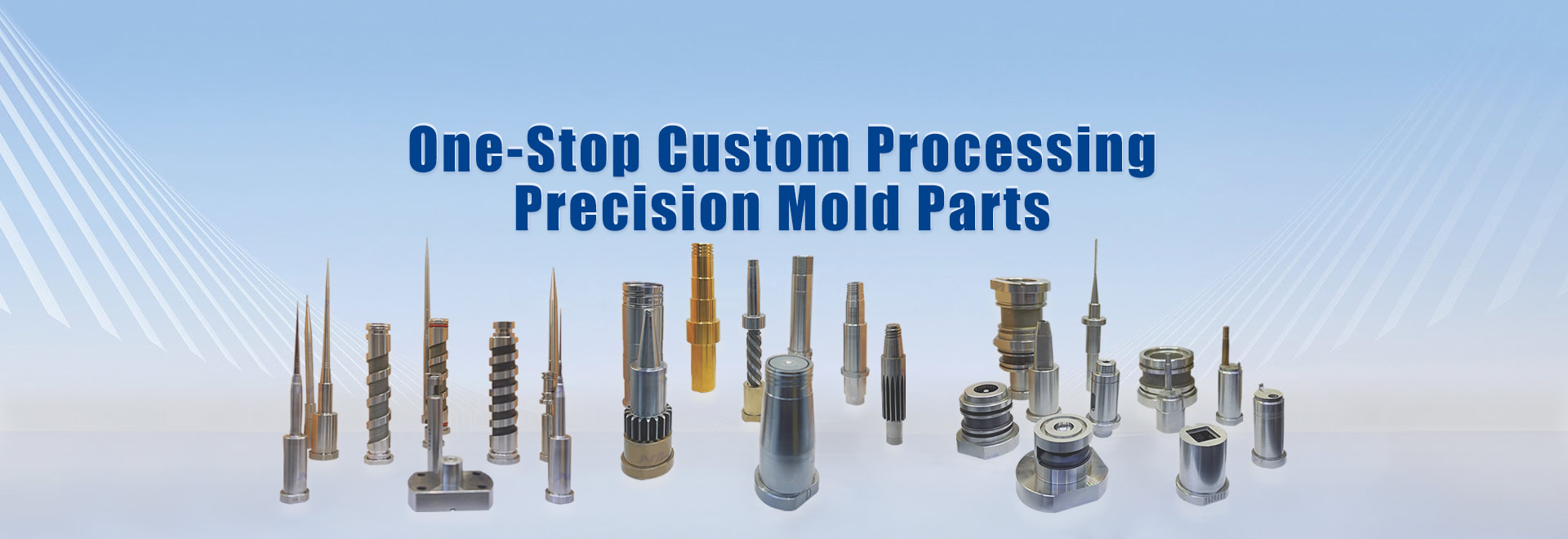
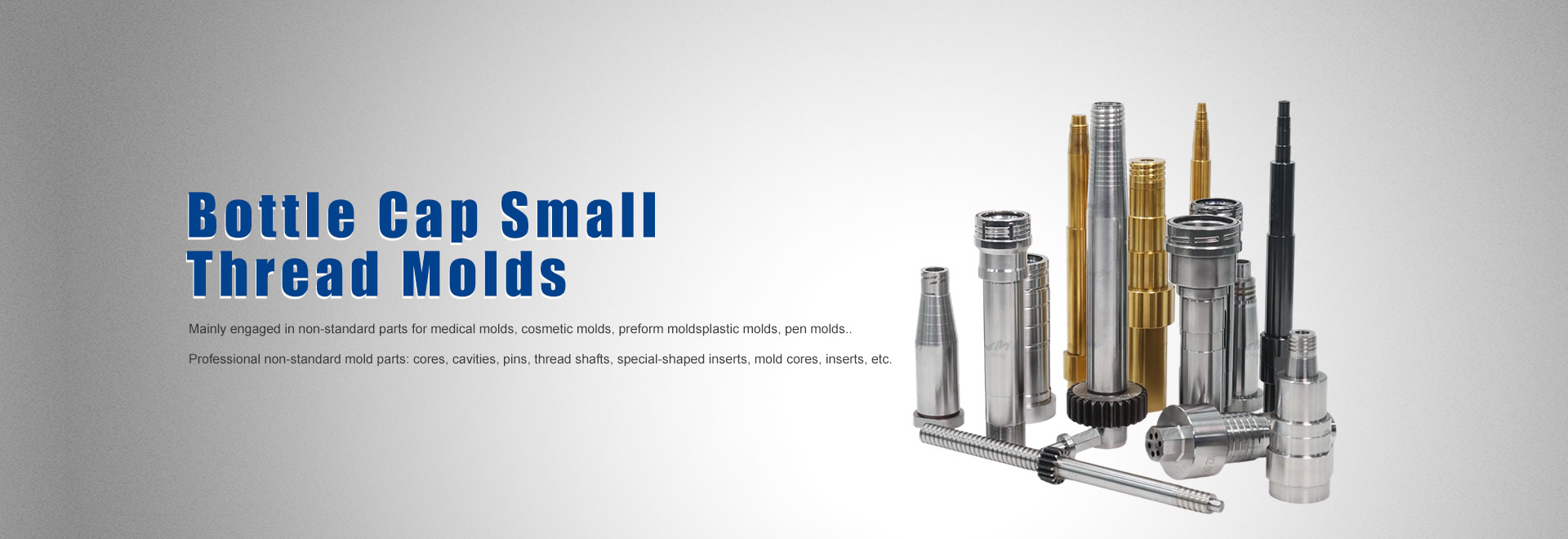
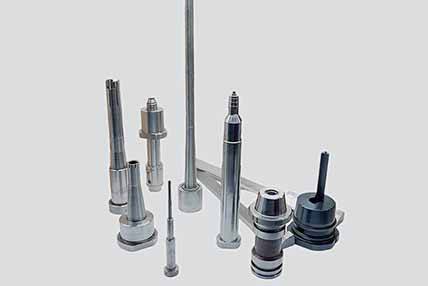
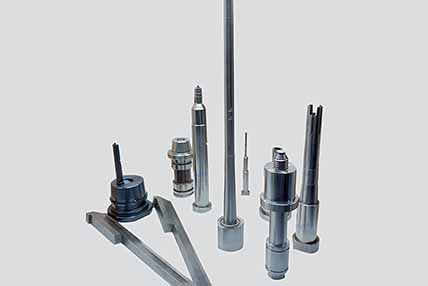
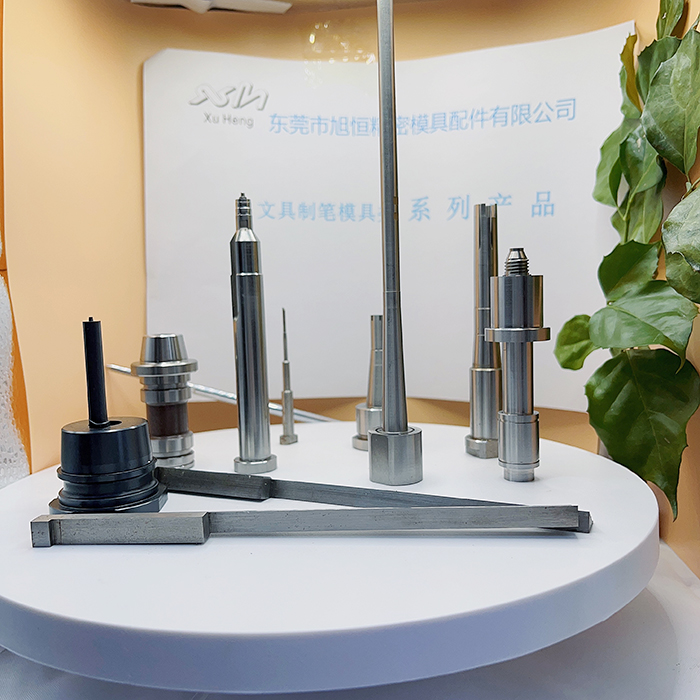
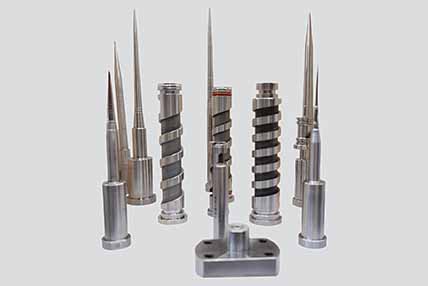
Introduction to the Characteristics of Precision Mold Parts: In addition to requiring sufficient strength and toughness, the surface performance of precision mold parts is crucial to their working performance and service life during operation. The improvement of these performances is very limited and uneconomical to rely solely on the improvement and enhancement of the base material. However, through surface treatment technology, it is often possible to achieve twice the result with half the effort. This is precisely the reason why surface treatment technology has developed rapidly. Mold polishing technology is an important component of mold surface engineering and a significant post-treatment process in the mold manufacturing process.
When the precision mold accessory blank undergoes plastic deformation in the mold cavity, it flows and slides along the cavity surface, causing intense friction between the cavity surface and the blank, which leads to the failure of the mold due to wear. Therefore, the wear resistance of materials is one of the most fundamental and important properties of molds. Hardness is the main factor affecting wear resistance. Generally speaking, the higher the hardness of mold parts, the smaller the wear amount and the better the wear resistance. In addition, wear resistance is also related to the type, quantity, morphology, size and distribution of carbides in the material.
The influence of the geometry of precision molds on the deformation during heat treatment is actually still exerted through thermal stress and organizational stress. Due to the diverse shapes of precision molds, it is still very difficult to summarize the exact deformation rules from them at present. For symmetrical precision molds, the deformation tendency of the cavity can be considered based on the cavity size, external dimensions and height. When the wall of a precision mold is thin and its height is small, it is easier to be quenched through. At this time, it is possible that the organizational stress plays a dominant role, so the cavity often tends to expand.
Multi-axis CNC is an indispensable processing equipment for mold parts processing. Adopting this equipment can bring certain advantages to enterprises. The adoption of multi-axis CNC machining has the following characteristics: 1. Reducing reference conversion and improving the processing accuracy of mold parts: The process integration of multi-axis CNC machining not only enhances the effectiveness of the process but also makes it easier to ensure processing accuracy as mold parts only need to be clamped once throughout the entire processing.
In addition to requiring sufficient strength and toughness, the surface performance of hardware mold parts is crucial to the working performance and service life of precision mold parts during operation. The improvement of these performances is very limited and uneconomical to rely solely on the improvement and enhancement of the base material. However, through surface treatment technology, it is often possible to achieve twice the result with half the effort. This is precisely the reason why surface treatment technology has developed rapidly. Mold polishing technology is an important component of mold surface engineering and a significant post-treatment process in the mold manufacturing process.