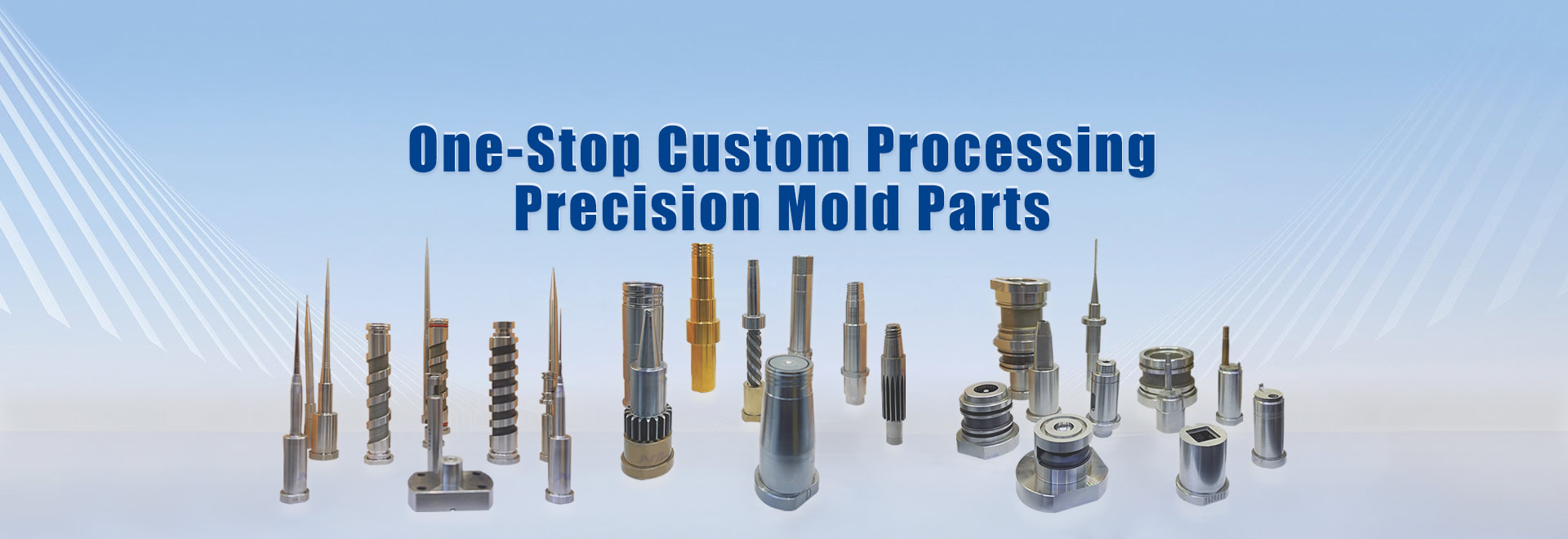
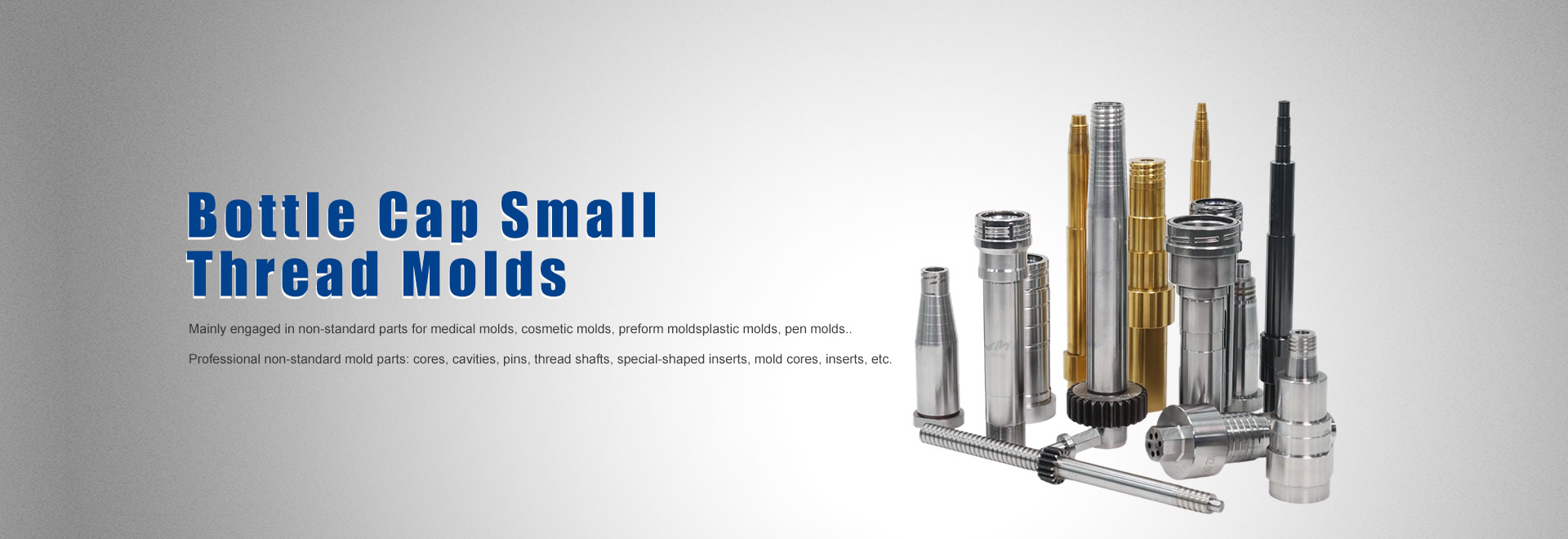
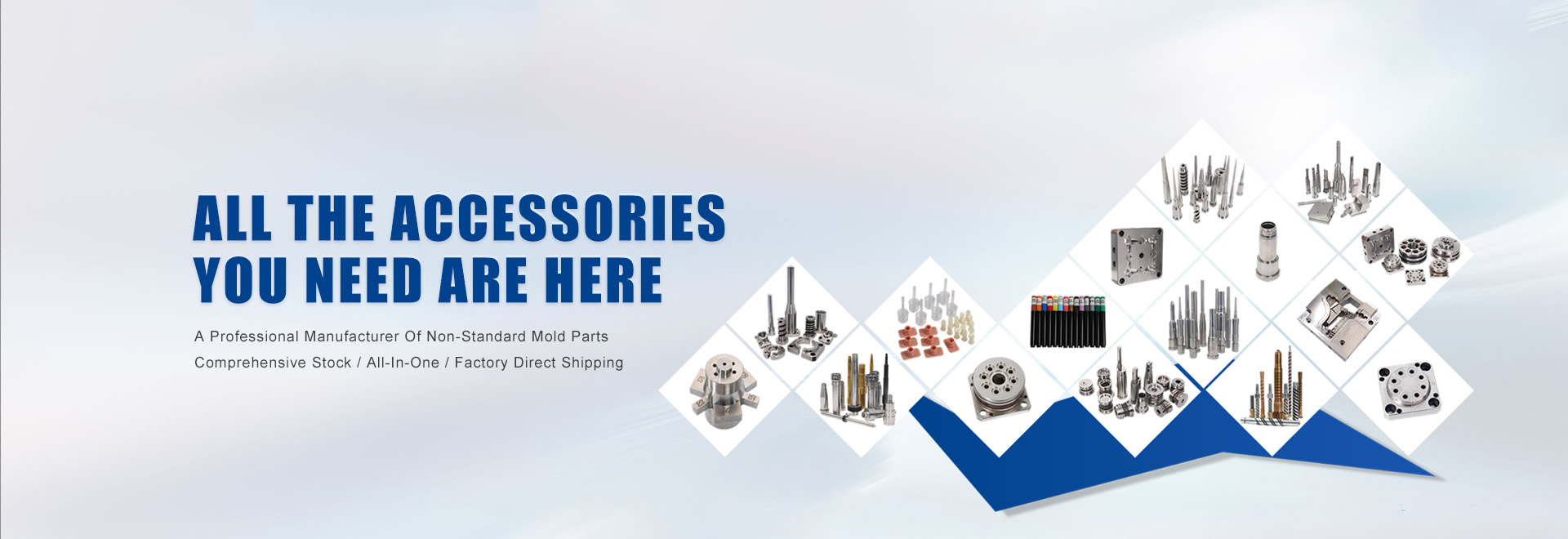
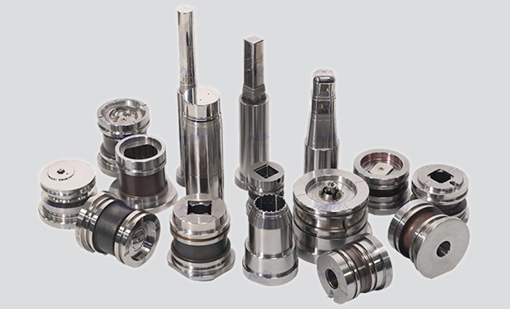
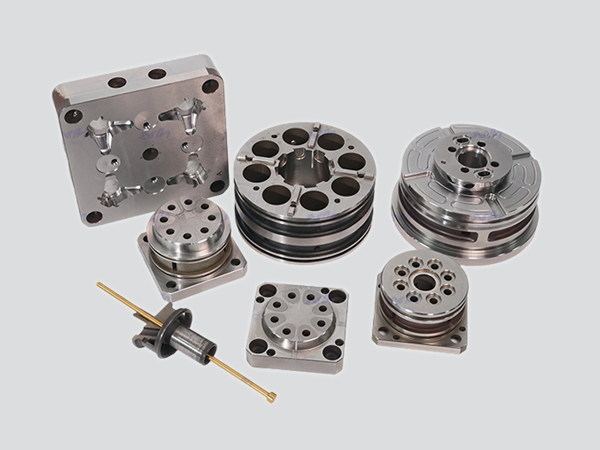
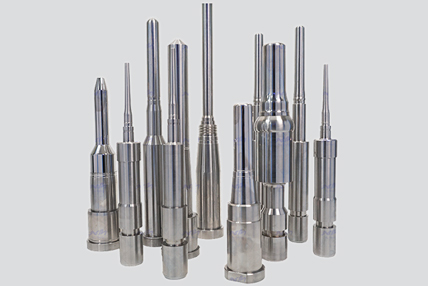
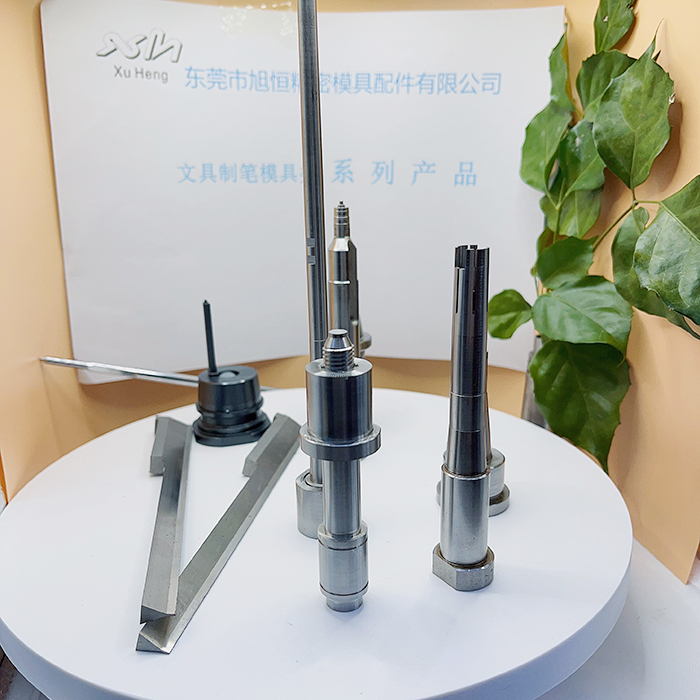
1. Reasonable design and optimization of structural design: The design of mold accessory parts should be reasonable, and the best structural scheme should be selected as much as possible to ensure that the technical requirements of the parts and their structure are in line with the processability and feasibility of mold manufacturing. When designing, the selection of mold materials, the usability and safety of the mold structure, the machinability of mold parts and the convenience of mold maintenance should be taken into consideration. Precise dimensions and tolerances: Reasonably determine the dimensions and tolerances of mold accessory parts, and take technical measures to prevent problems such as shrinkage rate errors, injection deformation, demolding deformation, and flash in injection molded products.
There are various ways to enhance production efficiency in mold parts processing. Here are some key strategies: 1. Optimize the processing flow: Through reasonable process planning, reduce repetitive operations and unnecessary steps, thereby improving production efficiency. 2. Introduce advanced processing technologies: Adopting high-precision and high-efficiency processing technologies such as CNC machining, electrical discharge machining, and laser cutting can significantly enhance the accuracy and manufacturing efficiency of molds. 3. Use high-quality cutting tools and cutting fluids: Ensure cutting effect and processing quality, reduce the frequency of tool replacement and maintenance, and improve production efficiency.
In the process of precision mold processing, reducing material waste is of great significance. This not only lowers costs but also helps protect the environment. Here are some methods that can help reduce material waste: Plan production schedules reasonably: Formulating a reasonable production plan is the key to avoiding material waste. Enterprises should, based on market demand and inventory conditions, rationally arrange the production sequence and quantity to avoid material waste caused by overproduction or underproduction. Meanwhile, for some regular products, mass production can be adopted to enhance production efficiency and reduce costs.
Introduction to the Characteristics of Precision Mold Parts: In addition to requiring sufficient strength and toughness, the surface performance of precision mold parts is crucial to their working performance and service life during operation. The improvement of these performances is very limited and uneconomical to rely solely on the improvement and enhancement of the base material. However, through surface treatment technology, it is often possible to achieve twice the result with half the effort. This is precisely the reason why surface treatment technology has developed rapidly. Mold polishing technology is an important component of mold surface engineering and a significant post-treatment process in the mold manufacturing process.