
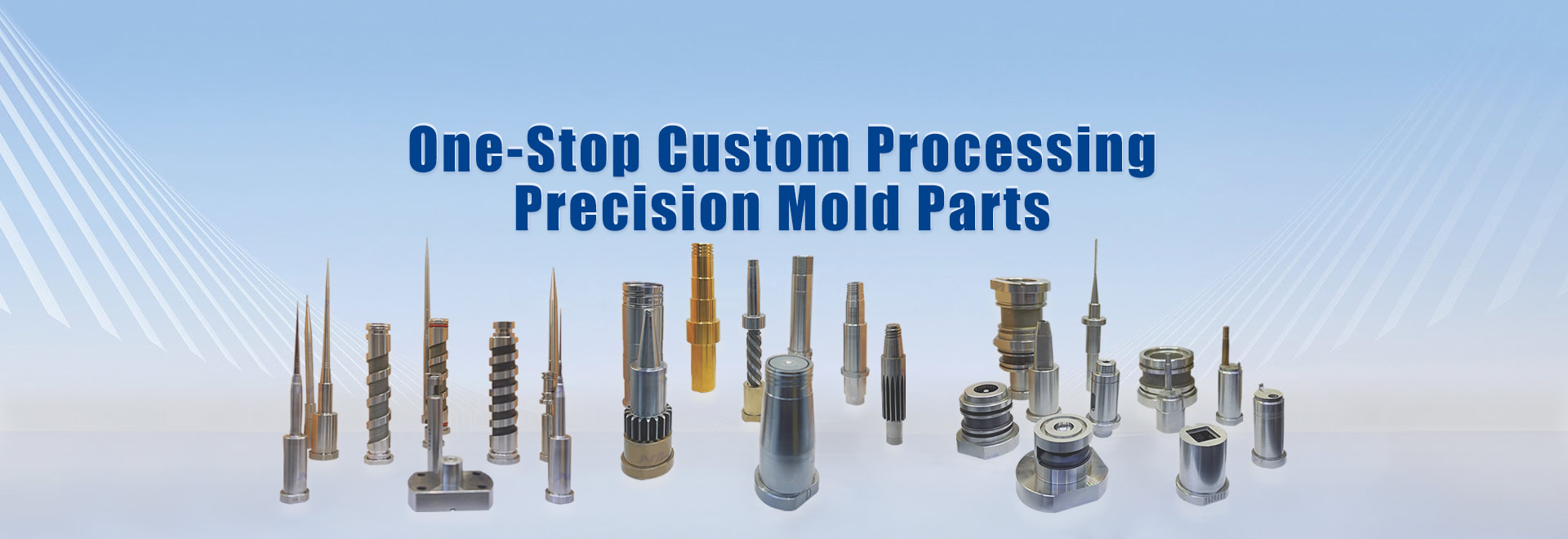
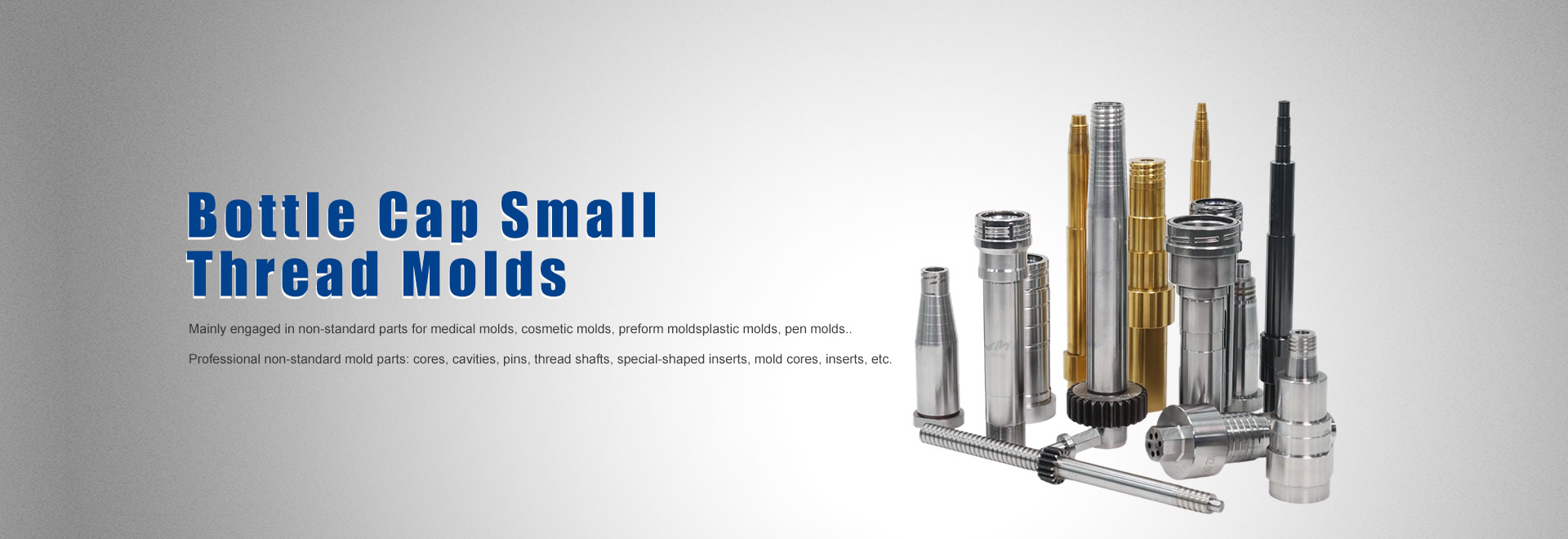
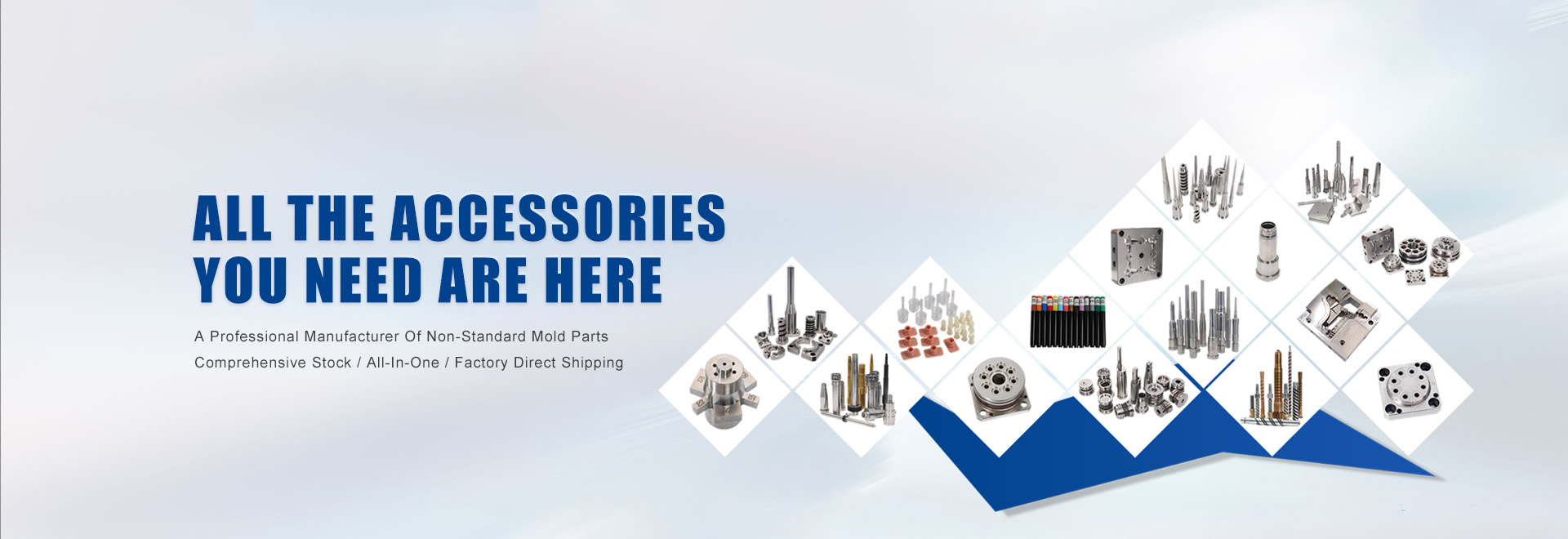
The general guiding ideology for the processing of mold parts is to carry out adaptive processing for different mold parts, different materials, different shapes and different technical requirements. There are many selective schemes. However, achieving the best processing effect and economy through the control of the processing procedure is the focus of our attention. According to the appearance and shape of mold parts, they can mainly be classified into three categories: shaft parts, disc parts, plate parts and formed special-shaped parts. The general process of these three types of parts is as follows: rough machining - semi-finishing -(quenching and tempering)- precision grinding - electrical discharge machining - fitter's finishing - assembly processing.
1. Heat treatment of mold parts
2. Grinding processing of mold parts
3. Electrical discharge machining of mold parts
4. Surface treatment of mold parts
The content of surface treatment for forming includes the absence of pores on the steel surface, uniform hardness, small differences in properties in all directions, low inclusions, and stress concentration areas such as tool marks and grinding marks left on the part surface during processing. Therefore, after the processing is completed, surface strengthening of the parts is required. This can be achieved through mechanical polishing, fitter grinding, and polishing to eliminate potential processing hazards. Blunt the useless edges, sharp corners and holes of the workpiece. Generally, the surface of electrical discharge machining will have a deteriorated hardened layer of about 6 to 10μm, which is grayish-white in color. This layer is brittle and has residual stress. Before use, the hardened layer should be fully removed by surface polishing to grind off the hardened layer. To achieve high-quality polishing results, the material, shape, hardness of the workpiece and the surface quality of the cutting process must be fully considered. It is essential to have high-quality polishing tools, superior polishing materials, correct polishing procedures, rigorous and well-organized personnel quality, and a good cleaning environment.

5. Assembly of mold components
During grinding and electrical discharge machining, the workpiece will have a certain degree of magnetization and a weak magnetic force, which is prone to adsorb some small impurities. Therefore, before assembly, the workpiece should be thoroughly demagnetized and its surface should be cleaned with ethyl acetate.
During the assembly process:
(1) First, understand the assembly drawing and assemble all kinds of parts.
(2) List the assembly sequence among each component;
(3) Check the dimensional accuracy of each component and clarify all fit requirements;
(4) Prepare all the necessary tools and then start assembling the mold.
(5) First, assemble the guide pins and guide sleeves of the mold base part and the cavity forming block assembly.
(6) Combine the assembly template with the punch and die, and slightly adjust the position of each plate.
(7) Open and close the mold and check whether the mold movement is reliable.
Countless practices have proved that for mold enterprises, paying attention to the process control of the fine processing technology of mold parts is the way for them to survive and develop effectively in the long run. Through process control, the out-of-tolerance and scrapping of parts can be minimized to the greatest extent, thereby effectively extending the service life of molds during production and use, which has profound significance for stabilizing product quality.

Online Service
National Sales Hotline 7*24 Hours
+86 188-2032-2971
+86 135-2851-7977
Follow Xuheng Precision