
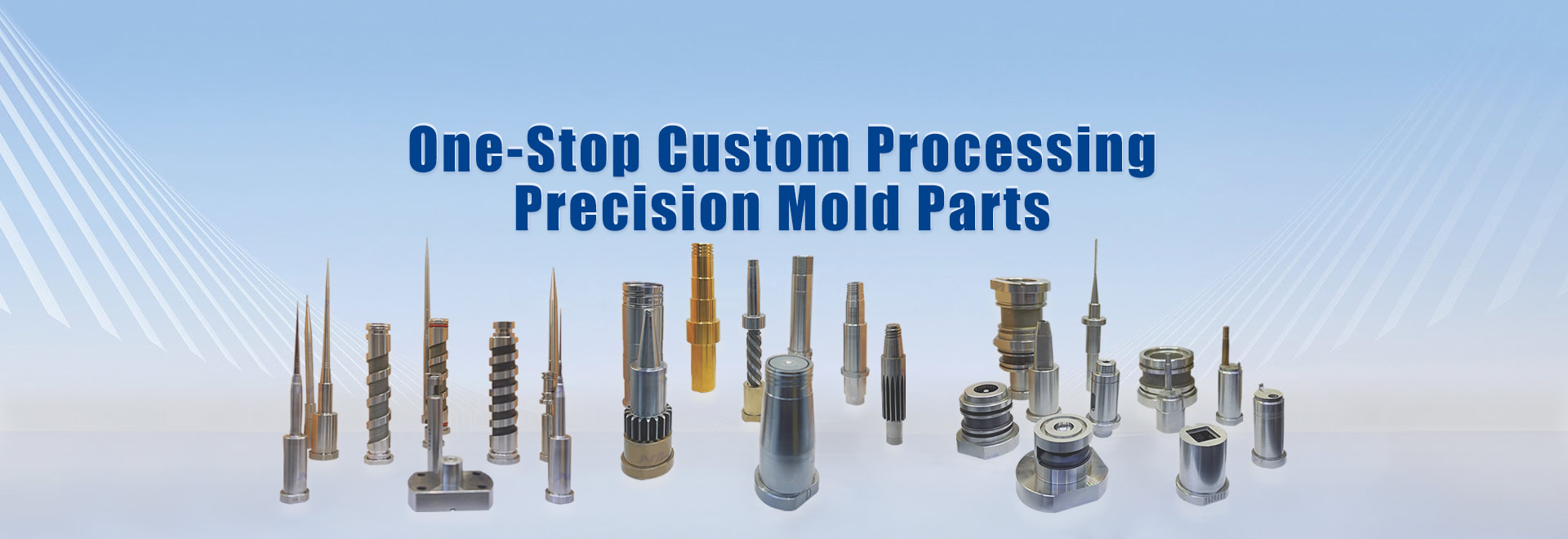
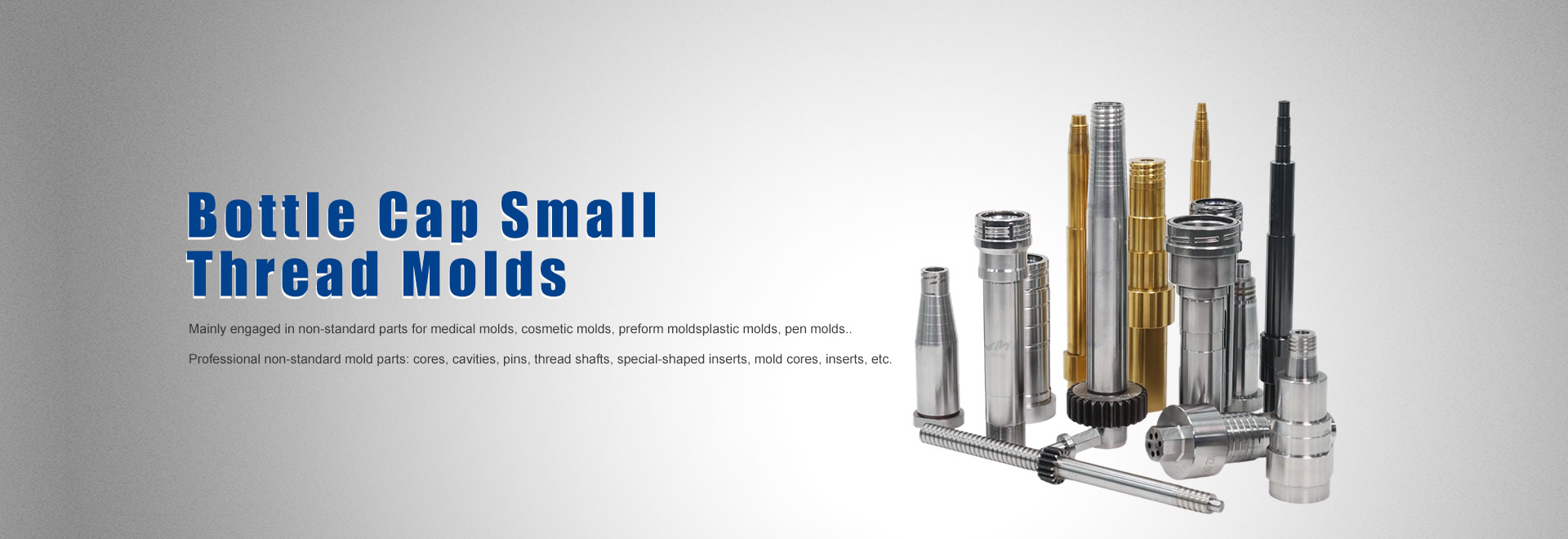
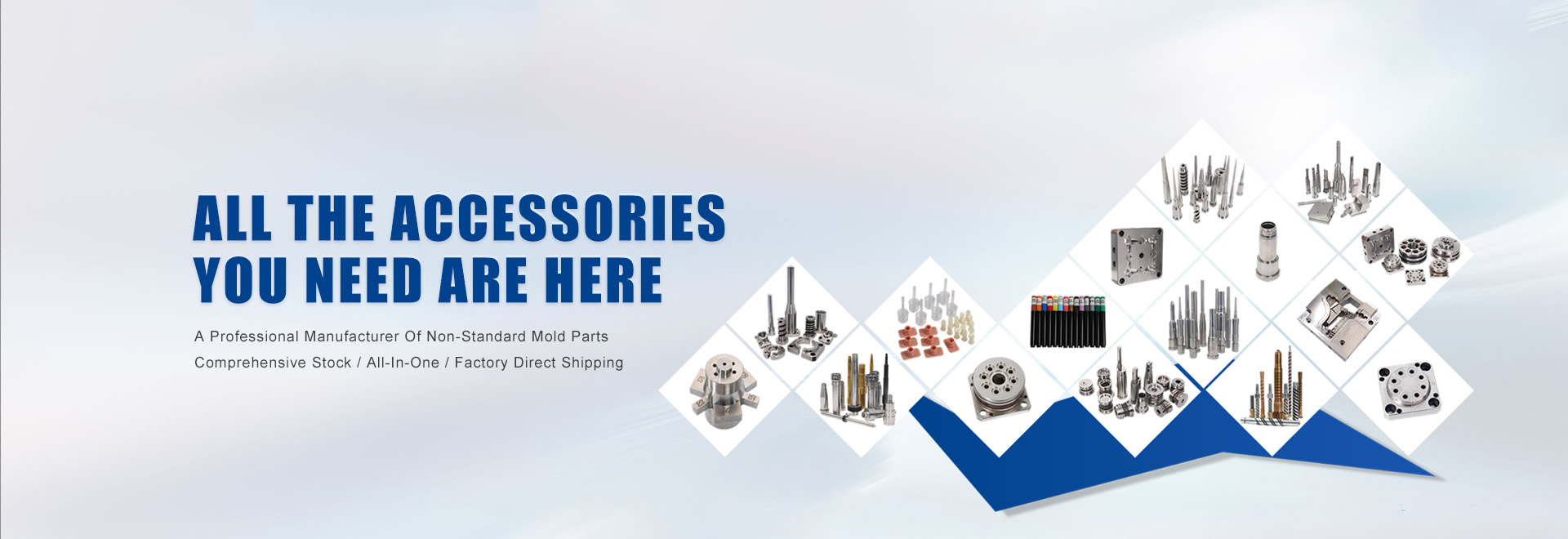
Mold accessories refer to the general term for metal parts specifically used on stamping dies, plastic molds or FA automation equipment in the mold industry. Mold accessories include: punches, punches, guide pins, guide sleeves, ejector pins, ejector cylinders, steel ball sleeves, oil-free guide sleeves, oil-free slide plates, guide pin assemblies, etc.
1. Wear resistance
When the billet undergoes plastic deformation in the mold cavity, it flows and slides along the cavity surface, causing intense friction between the cavity surface and the billet, which leads to the failure of the mold due to wear. Therefore, the wear resistance of materials is one of the most fundamental and important properties of molds.
Hardness is the main factor affecting wear resistance. Generally speaking, the higher the hardness of mold parts, the smaller the wear amount and the better the wear resistance. In addition, wear resistance is also related to the type, quantity, morphology, size and distribution of carbides in the material.
2. Strong toughness
The working conditions of molds are mostly very harsh, and some often bear large impact loads, which leads to brittle fracture. To prevent sudden brittle fracture of mold parts during operation, the mold should have high strength and toughness. The toughness of a mold mainly depends on the carbon content, grain size and microstructure of the material.

3. Fatigue fracture performance
During the operation of molds, under the long-term effect of cyclic stress, fatigue fracture often occurs. Its forms include low-energy multiple impact fatigue fracture, tensile fatigue fracture, contact fatigue fracture and bending fatigue fracture. The fatigue fracture performance of molds mainly depends on their strength, toughness, hardness, and the content of inclusions in the material.
4. High-temperature performance
When the working temperature of the mold is relatively high, it will cause a decrease in hardness and strength, leading to premature wear of the mold or plastic deformation and failure. Therefore, the mold material should have high anti-tempering stability to ensure that the mold has high hardness and strength at the working temperature.
5. Resistance to cold and heat fatigue
Some molds are in a state of repeated heating and cooling during operation, which subject the cavity surface to tensile and compressive variable stresses, causing surface cracking and spalling, increasing friction, hindering plastic deformation, reducing dimensional accuracy, and ultimately leading to mold failure. Cold and hot fatigue is one of the main forms of failure for hot working dies. Therefore, such dies should have high resistance to cold and hot fatigue.
6. Corrosion resistance
Some molds, such as plastic molds, during operation, due to the presence of elements like chlorine and fluorine in the plastic, decompose and release highly corrosive gases like HCI and HF when heated, which erode the surface of the mold cavity, increase its surface roughness, and accelerate wear and failure.

Online Service
National Sales Hotline 7*24 Hours
+86 188-2032-2971
+86 135-2851-7977
Follow Xuheng Precision