

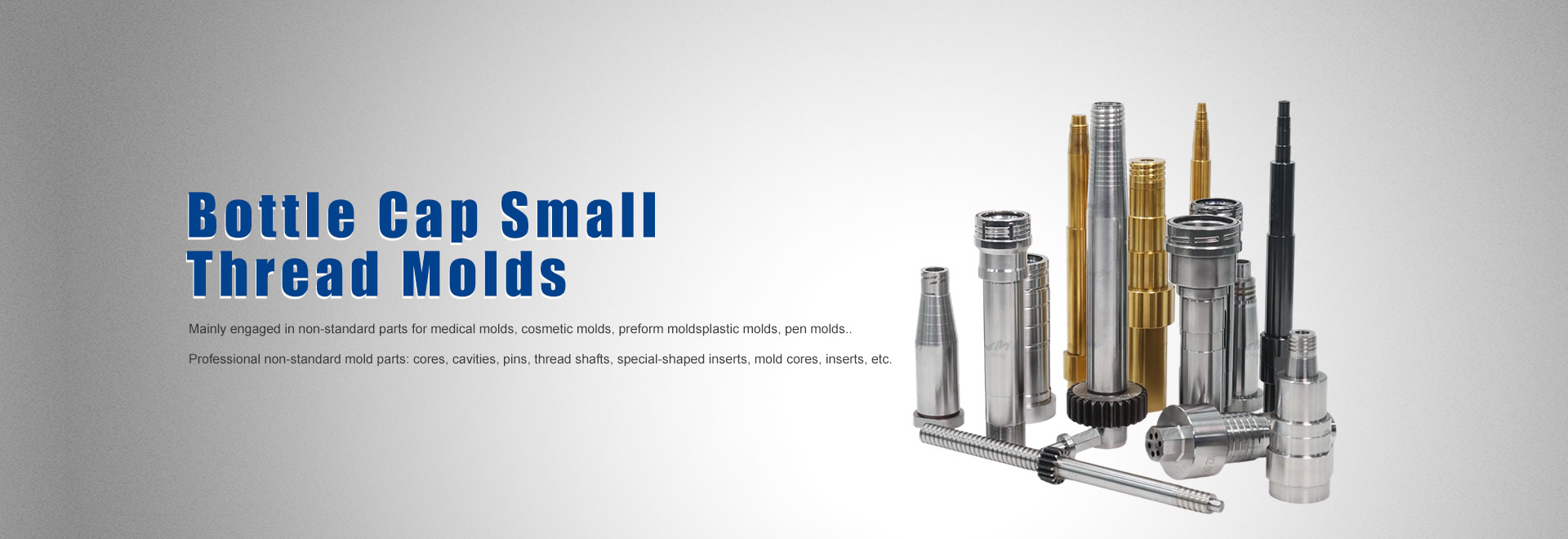

The annual maintenance procedures required for each injection molding position of the mold depend on different mold cycle periods. The following are some maintenance tips for mold accessories, which can be used by every mold user to ensure the effective operation of mold components such as hot runners, heaters, guide pins and ejector pins, and forming inserts, and to prevent unexpected situations.
1. Check if there is any warning sign of rust or dampness at the vent holes. If you notice rust or dampness near the exhaust hole of the hot runner, it indicates that there is condensation inside or the water pipe may have burst. Dampness can cause a fatal short circuit to the heater. If the machine does not run non-stop throughout the year and needs to be shut down at night or on weekends, the probability of this condensation phenomenon occurring will increase.
2. Remember to remind the operator not to "clean" off the hot nozzle at the gate. If the operator happens to notice a small piece of stainless steel at the mold nozzle, it might be a point nozzle assembly. Clearing away what seems to be an obstacle often ruins the hot mouth. To avoid damaging the hot nozzles, please confirm the type of nozzles in the hot runner system before taking action and ensure that all operators are well-trained and can identify the different types of nozzles they come into contact with.
3. Sliding stop. For machines that operate non-stop throughout the year, this work should be carried out once a week. The end of the year is a great time to carry out a routine lubrication and maintenance for these parts.
4. Interactively verify the resistance value of the heater. You should have measured the resistance value of the heater when you first started using it, and the end of the year is the time to measure it again and make a comparison. If the resistance value fluctuates by ±10%, it is necessary to consider replacing the heater to ensure that it does not malfunction at critical moments in the production process. If the initial resistance value has never been measured before, measure it now and use the obtained value as a reference for future inspections of the heater.

5. Check whether there are any signs of wear on the guide pins and guide sleeves. Look for any marks such as scratches or abrasions. This kind of wear and tear of mold parts is caused by a lack of lubrication. If the marks are just beginning to appear, you can also extend the service life of the guide pins and guide sleeves by adding lubricant. If the wear is already very severe, then new parts should be replaced. Otherwise, the cavity and core parts may not fit well, resulting in uneven thickness of the cavity walls of the components.
6. Check the water flow conditions. Connect a hose at the waterway outlet to let the water flow through the pipe into the bucket. If the water flowing out is not clear or has a color, it may indicate that rust has occurred, and if the water flow is not smooth, it means that there is a blockage somewhere. If you find these problems, drill all the water pipes through again (or use any method you use most frequently to clean them) to ensure they are unobstructed. Improving the water treatment system of the factory can prevent various problems caused by rust and blockage from happening again in the future.
7. Clean the ejector pins. After a year, the thimble will become very dirty due to gas accumulation and film-like impurities. It is recommended to thoroughly clean it with a mold cleaner every 6 to 12 months. After cleaning thoroughly, apply a layer of lubricant to the thunks to prevent scratches or breaks.
8. Check whether there is a break in the radius area of the hot nozzle. The fracture is caused by the loose and hardened plastic fragments remaining in the hot mouth of the machine being subjected to the clamping force from the barrel assembly during forward injection molding. The cause of the problem might also be that the center line is not aligned properly. When a break is found, these two possibilities should be considered. If the damage has become severe enough to prevent petal-shaped leakage (a term used by mold users in the past, referring to plastic leakage between the guide sleeve and the hot nozzle of the machine), the gate sleeve should be replaced in a timely manner.

Online Service
National Sales Hotline 7*24 Hours
+86 188-2032-2971
+86 135-2851-7977
Follow Xuheng Precision