
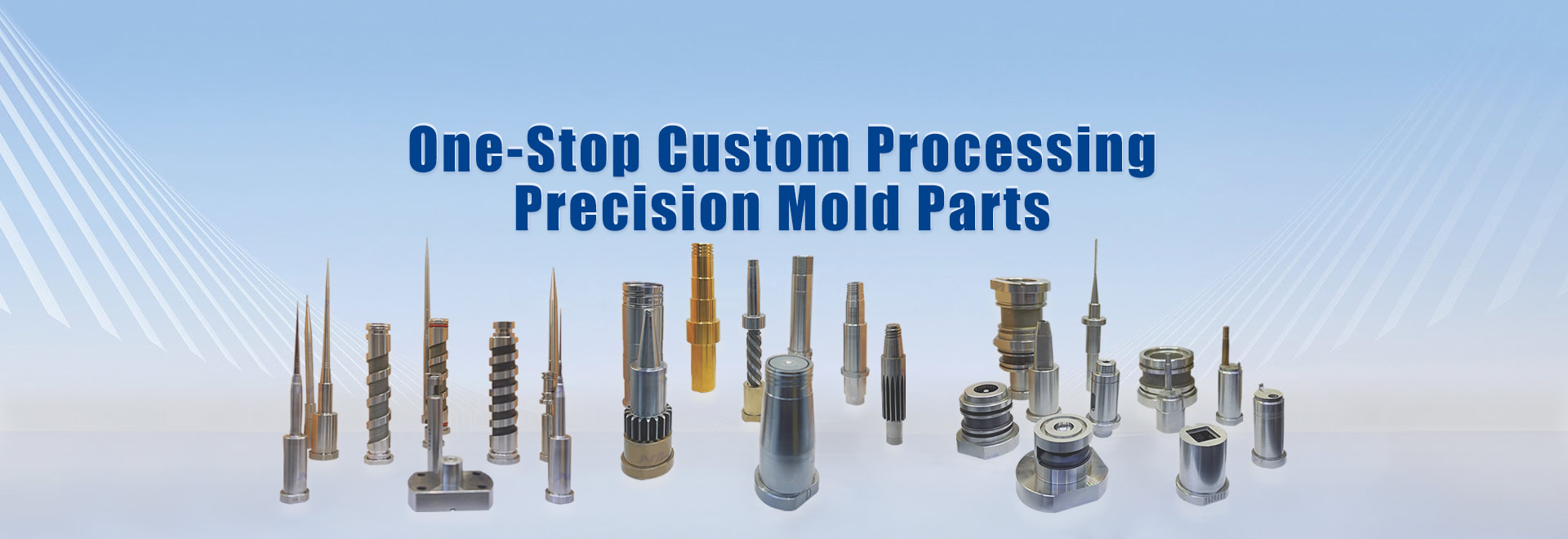
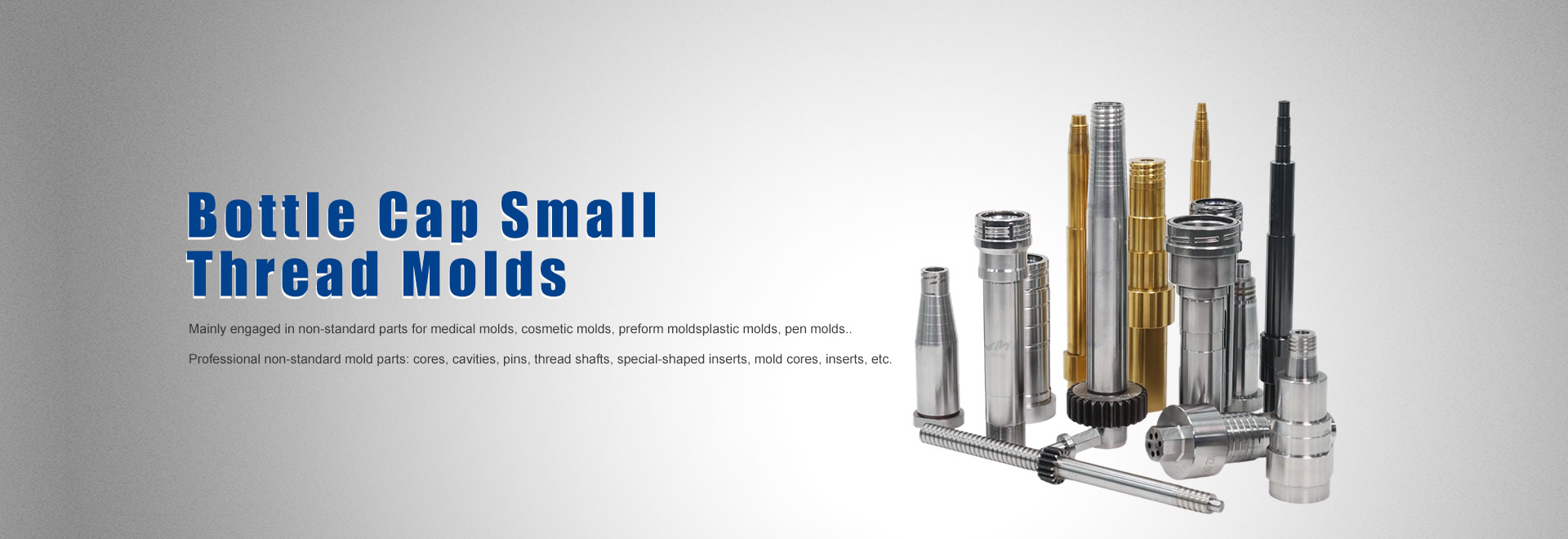
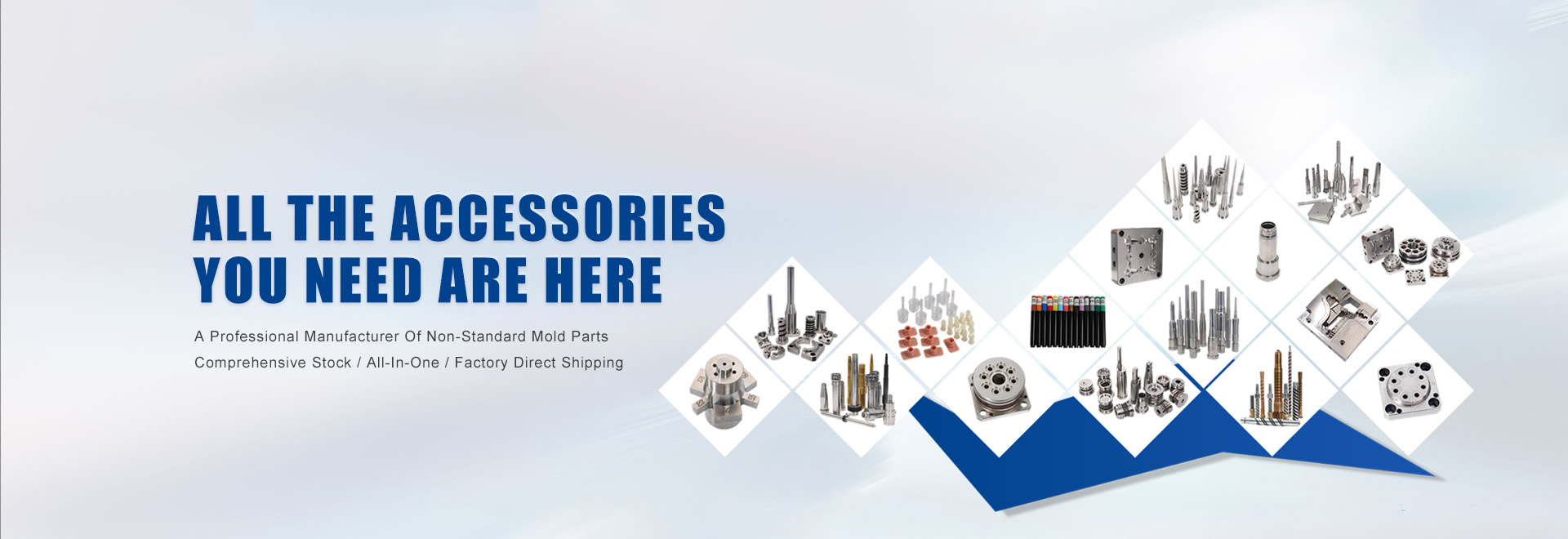
Precision mold parts play a crucial role in the use and maintenance of molds, and their specific functions are reflected in the following aspects:

1. Ensure the precision and stability of the mold
High-precision processing: Precision mold parts undergo precise processing, with extremely high dimensional and shape accuracy, which can ensure that the mold maintains a high degree of accuracy and stability during use. This is crucial for the production of high-quality and high-precision products.
Positioning and guidance: Accessories such as guide pins and guide sleeves can ensure that the upper and lower molds of the mold are precisely aligned when closed, avoiding offset or misalignment, thereby guaranteeing the dimensional accuracy and appearance quality of the product.
2. Enhance the durability of molds
Wear resistance: Precision mold parts are usually made of materials with good wear resistance, such as hard alloy and high-speed steel, which can maintain good wear resistance during long-term use, reduce wear and extend the service life of the mold.
Corrosion resistance: Some special-purpose mold accessories also have corrosion resistance, which can maintain stable performance in harsh working environments and prevent failure or damage caused by corrosion.
3. It is convenient for the maintenance and replacement of molds
Modular design: Many precision mold components adopt a modular design, which is convenient for disassembly and replacement. When a certain component in the mold is damaged or severely worn, a new component can be quickly replaced without the need for a major overhaul of the entire mold, thereby shortening the maintenance time and reducing the maintenance cost.
Standardization and universality: Some precision mold parts follow unified standards and specifications, and have a high degree of universality. This means that when it comes to maintenance or replacement, it is easier to find suitable parts, thereby improving the efficiency of maintenance.
4. Achieve special functions
Lateral parting: Accessories such as sliders and inclined guide pins can achieve lateral parting of the mold, enabling the mold to produce products with complex structures such as side holes and side depressions.
Hot runner system: The hot runner system, composed of hot runner plates, hot runner nozzles and other accessories, can provide a uniform heat source for the mold, keeping the plastic melt at a stable temperature and fluidity in the mold, thereby improving product quality and production efficiency.
5. Optimize the production process
Automated production: The precise coordination and efficient operation of precision mold components enable molds to achieve automated production, reduce manual intervention, and enhance production efficiency and product quality.
Reduce scrap rate: Due to the high precision and stability of precision mold parts, molds can more accurately control the size and shape of products during the production process, thereby reducing the scrap rate and improving the material utilization rate.
In conclusion, precision mold parts play multiple roles in the use and maintenance of molds, such as ensuring mold accuracy and stability, enhancing mold durability, facilitating mold maintenance and replacement, achieving special functions, and optimizing production processes. They are of great significance for enhancing the overall performance of molds, reducing production costs and improving product quality.

Online Service
National Sales Hotline 7*24 Hours
+86 188-2032-2971
+86 135-2851-7977
Follow Xuheng Precision